This is a series of posts where I play 100 boardgames.
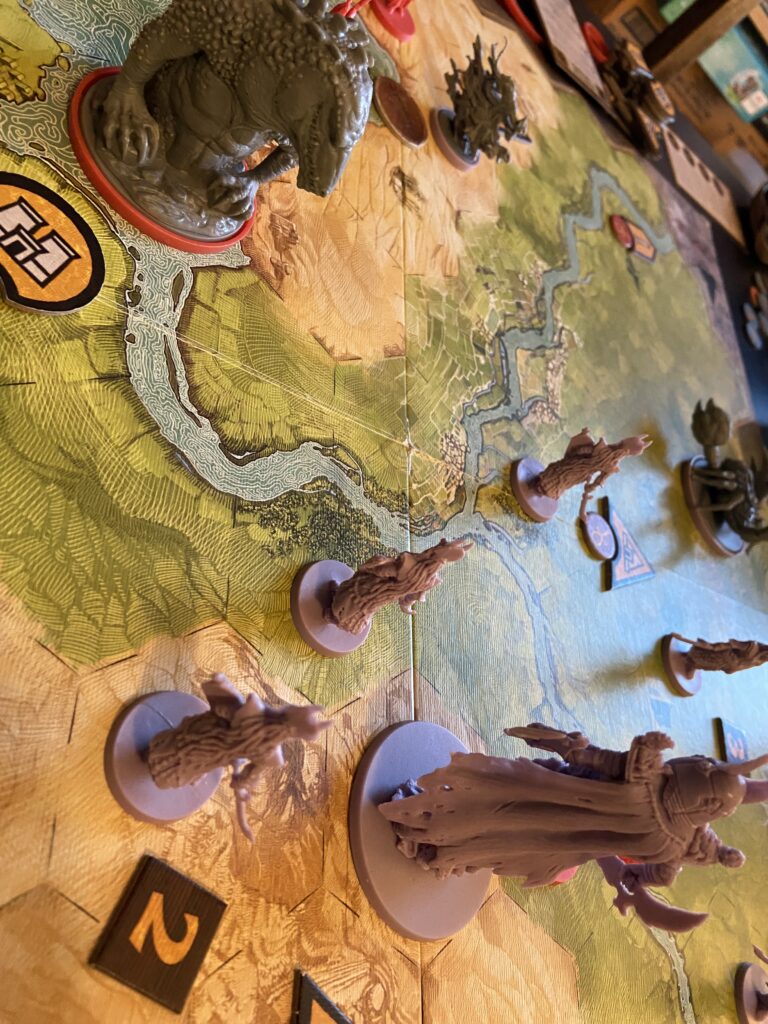
Game: Ankh: Gods of Egypt
Designer: Eric M. Lang
Year: 2021
Country: U.S.A.
Publisher: CMON
Toy value is a term referring to the toy-like enjoyment derived from physical objects. If an object is fun to handle and play around with, it has high toy value. With boardgames, you could use anonymous, blank components to model the functioning of an abstract mechanical design and it would be entirely functional. However, the game’s mechanical design is not the totality of the experience. the visuals, the theme, the story and the toy value of the physical components also plays a part.
Ankh: Gods of Egypt is an area control game about gods such and Amon and Anubis, battling it out in an Egypt transitioning from polytheism to monotheism. Each god seeks to gain as much devotion as possible by building temples and warring with other gods.
Each turn, the player chooses from four core actions: movement, summoning, gaining followers and gaining ankh powers. the latter are power ups and the followers are currency. For the tactical game, the relevant actions are movement and summoning which are used to position your forces on the board. The physical components representing your god and the soldiers are big and pleasing, lending drama to the game.
There’s a progress track which grants benefits to the player who reaches a new stage, such as the opportunity to gain control of a temple. The progress track also features conflicts which are key to winning the game. In a conflict, the players go through each of the board’s areas to see which configurations of temples grant victory points and who wins battles between troops and other figures. There are special abilities which let you win points by losing battles, adding complexity to the conflicts.
The game’s most distinctive mechanic involves merging the gods of two of the losing players Amun-Ra style, so that their combined god might still have a chance at victory. It’s a good mechanic to have because it feels like the design tends to produce runaway winners.
The mechanics of the game take big swings, with powers that feel downright unbalanced until you see that everyone has something like that in their arsenal. There’s a messiness to the game which makesn it entertaining.